Curious to see how Pinch works? Check it out



Accepting credit card payments is one of the simplest ways for small businesses to improve cash flow, reduce payment delays, and make it easier for customers to pay.
To accept credit card payments, you need three things: a payment provider, a way to collect card details (online, in person, or over the phone), and a system to receive funds into your business account.
Once these are in place, you can start accepting payments almost immediately.
This guide walks you through exactly how to accept credit card payments for your small business, including setup, costs, and the best options available in Australia.
What Does It Mean to Accept Credit Card Payments?
Accepting credit card payments means giving customers the ability to pay for your products or services using a Visa, Mastercard, or American Express card. For small businesses, this can happen online via a payment link, over the phone, or through an automated billing arrangement.
Credit card processing for small businesses involves three parties: your payment platform, the customer's bank, and the card network. When a customer pays, the transaction is verified, and funds are settled into your account, typically within one to two business days.
Why Accept Credit Card Payments as a Small Business?
Small businesses that accept credit card payments get paid faster, reduce manual follow-up, and give customers a more convenient way to pay. Here is why it matters:
- Faster settlement. Credit card payments settle faster than traditional Australian interbank transfers, which can take one to three business days. When invoices only show a BSB and account number, customers have to log into their bank, enter their details manually, and process the transfer themselves. A credit card payment link removes all of that friction.
- Lower risk of late payment. When paying by card is easy, customers are more likely to pay on time. Businesses that rely solely on bank transfers often find invoices sitting unpaid simply because the process is inconvenient.
- Phone payments. With a credit card processing system in place, you can take payment over the phone in real time. Instead of asking a customer to pay after a call, you collect card details during the conversation and process the payment immediately.
- Recurring billing. Credit card processing makes it straightforward to set up ongoing payment arrangements. Customers authorise their card once, and future payments are collected automatically on agreed dates.
- Automatic record-keeping. Credit card transactions processed through Pinch are automatically matched to invoices and reconciled in your accounting software, reducing manual data entry.
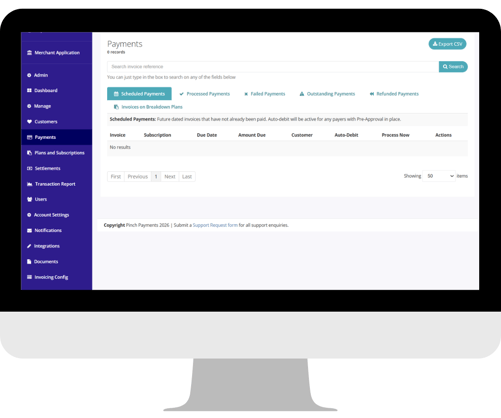
How Credit Card Processing Works for Small Business
When a customer pays by card, the following happens:
- The customer enters their card details via your payment link, portal, or over the phone.
- The payment gateway encrypts the data and sends it to the payment processor.
- The processor contacts the customer's bank for authorisation.
- The bank approves or declines the transaction.
- Funds are settled into your merchant account, typically within one to two business days.
The entire process takes seconds from the customer's perspective. Behind the scenes, tokenisation ensures card details are never stored in a readable format, protecting both you and your customer.
How to Accept Credit Card Payments Online in Australia
The most common way for Australian small businesses to accept credit card payments online is through a payment link embedded in an invoice or sent directly to a customer. Pinch Payments supports this in three ways:
- Invoice payment links. Pinch adds a pay-now button to your invoices. Customers click the link, enter their card details, and pay in under a minute. No bank login required.
- Customer payment portal. Customers can log into a self-service portal, view outstanding invoices, and pay by card or direct debit on their own.
- Phone payments. You can enter a customer's card details directly into Pinch during a call and process the payment immediately.
Leveraging Pinch for Streamlined Credit Card Processing
Utilising Pinch as your credit card payment solution can further enhance your payment efficiency. Beyond the advantages mentioned earlier, Pinch simplifies the process of collecting payments over the phone. Instead of relying on customers to make a payment after the call ends, you can request their credit card details during the conversation and secure the payment instantly.
Furthermore, Pinch enables you to establish ongoing direct debit agreements at the point of payment collection, as well as payment plans, offering a proactive solution to prevent delays caused by forgetfulness. This not only simplifies the payment process but also helps in retaining loyal customers who may sometimes forget to make their payments on time.
How to Get Started: Accepting Credit Card Payments with Pinch
Getting set up with credit card processing for a small business through Pinch takes three steps.
Step 1: Create a Pinch account. The sign-up process is straightforward and takes a few minutes.
Step 2: Connect your accounting software. Pinch integrates directly with Xero, MYOB, and QuickBooks. Once connected, your invoices sync automatically, and payments are reconciled without manual entry.
Step 3: Add the payment link to your invoice template. Pinch guides you through adding a pay-now button to your existing invoice theme. You can also control whether Pinch sends payment reminder notifications to customers.
After setup, you will complete a short compliance and KYC (know your customer) check. Once approved, you are ready to start accepting credit card payments.
Exploring Additional Benefits of Credit Card Payments
In addition to the fundamental advantages of accepting credit card payments for small businesses, there are other perks worth mentioning:
- Reduced Cash Handling. Accepting credit card payments means you will deal with less cash, reducing the risks associated with cash handling, such as theft or loss.
- Improved Record-Keeping. Credit card transactions in Pinch are automatically recorded, making it easier to keep track of payments, reconcile accounts, and prepare financial statements.
- Enhanced Professionalism. Offering credit card payments can enhance your business's professionalism and credibility, which can be especially valuable when dealing with clients or customers who prefer the convenience of credit card payments.
- Global Reach. Credit card payments allow you to potentially tap into global markets, as customers from around the world can make payments with ease, thus expanding your customer base.
- Customer Trust. Many customers feel more secure when making credit card payments, as they have fraud protection and can dispute charges if necessary. This trust can improve your customer relationships.
- Competitive Advantage. Small businesses that accept credit card payments may gain a competitive edge over those that rely solely on traditional payment methods.
The Mechanics of Pinch Payments
To shed light on how Pinch Payments operates in more detail, here is an overview of the process:
- Account Creation. Begin by creating an account on the Pinch Payments platform. This registration process is user-friendly and tailored to small business needs.
- Accounting Software Integration. If your small business relies on accounting software such as Xero, MYOB, or QuickBooks, Pinch Payments offers seamless integration, streamlining your financial processes.
- Invoice Enhancement. After integrating your accounting software, Pinch Payments guides you in adding the credit card payment link to your existing invoice theme. This addition simplifies the payment process for your customers.
- Identification Verification. As part of the setup process, you may be required to submit identification documents to ensure security and compliance. Once these documents are approved, your small business will be fully equipped to receive credit card payments.
- Exploring Pinch's Full Potential. Beyond the essentials, it is highly recommended to engage with Pinch Payments' customer success team. This consultation can provide valuable insights into additional features and strategies that can help you eliminate late or non-payments.
How Accepting Card Payments Improves Your Bottom Line
In the competitive landscape of small business, every advantage counts. Embracing credit card payments and leveraging the capabilities of Pinch Payments can be a transformative move. It's not merely about accepting payments; it's about streamlining your financial processes, reducing payment friction, and fortifying your business's financial health.
The benefits extend to customer satisfaction, as clients appreciate the convenience and security of credit card payments. In a world where convenience and efficiency are paramount, offering multiple payment options is a strategic imperative. Your small business can achieve financial stability, gain a competitive edge, and foster lasting customer relationships through this simple yet effective strategy.
Conclusion
Accepting credit card payments is one of the most effective ways for Australian small businesses to get paid faster and reduce the admin involved in chasing invoices. Combined with direct debit and automated billing, it removes the friction that causes late payments in the first place.
Pinch Payments gives Australian small businesses a single platform to accept cards, set up direct debit, automate invoice collection, and reconcile payments in Xero, MYOB, or QuickBooks.
Disclaimer: The information provided in this guide is for general informational purposes only. It does not constitute legal, financial, or taxation advice. While we strive to provide accurate and up-to-date details based on current Australian regulations, business requirements can change. We recommend consulting with a qualified accountant, lawyer, or business advisor before making any significant decisions or taking action based on this content.